


Hello
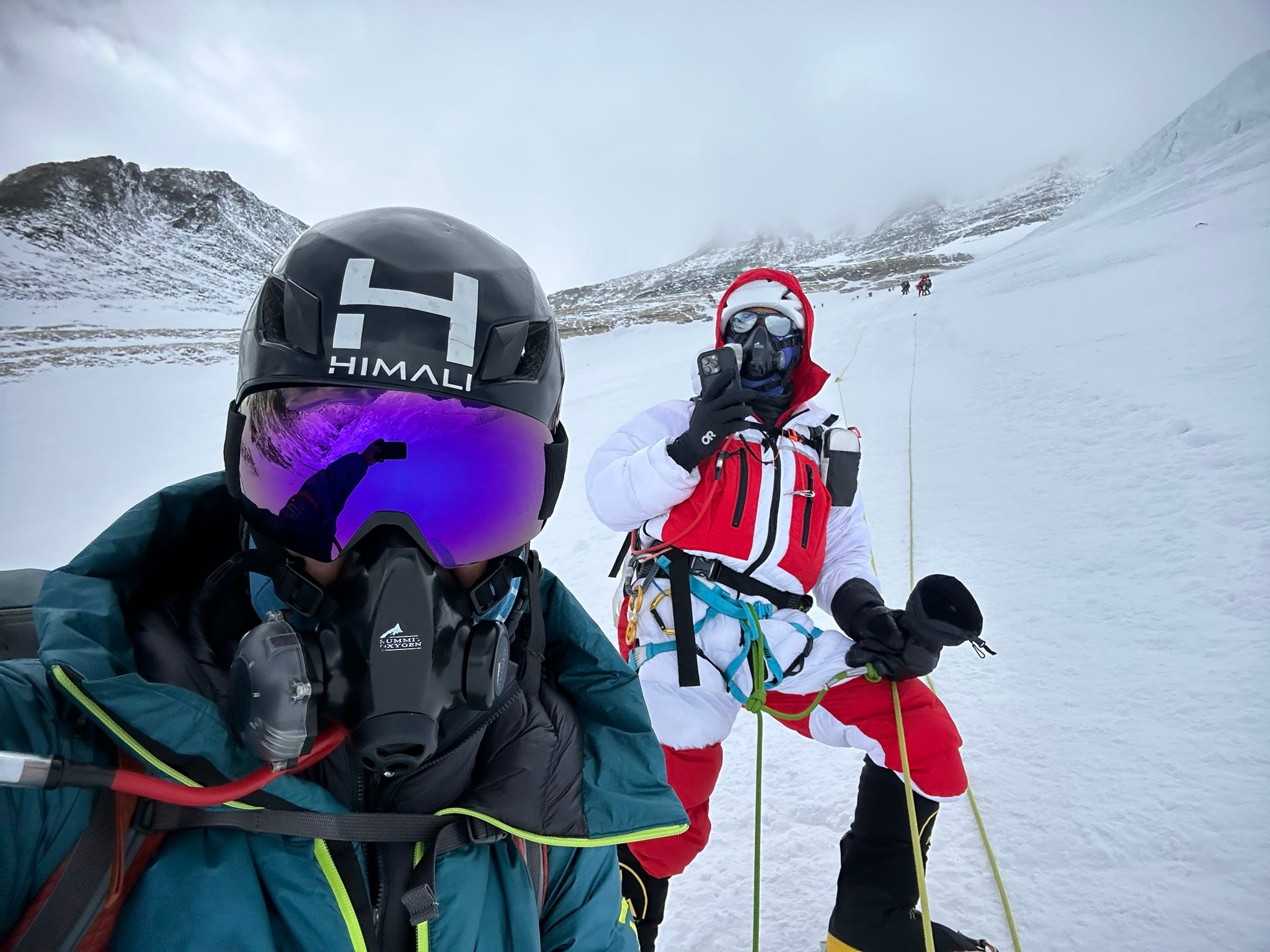
I summited Everest in 2024. The first person to congratulate me afterward was a friend from the Nepalese Army who was at Camp 4 running a recovery. While he was doing it, a frozen body lay on the ground beside us.
A Sherpa climber had been abandoned higher up several years back, in the stretch of the mountain called The Death Zone, where the air will not sustain a human being for long, and where carrying someone out can kill the people carrying them.
My friend’s team had finally brought this Sherpa’s body down. The body was lying a few feet away from us while we talked. Waxy is the word that keeps coming back to me, because at that altitude, a frozen body does not look asleep and does not look like a person.
My friend was generous, warm, and genuinely delighted for me. He is an extraordinary man. He congratulated me with the recovered dead beside us, and I received it; both were happening at once, and neither interrupted the other.
That is the part I want to describe, as it took me a long time to say it without arranging it into something more flattering.
Something in me knew precisely what to do with the congratulations. It had a category ready, a response prepared, a small clean sense of completion available on demand. That same something had nothing whatsoever to say about the man on the ice, and what I felt was not indifference; there was no channel between the two.
The function receiving the congratulations and the function that the body should have undone were not in contact with each other. I stood there at Camp 4, in the middle of my own achievement, discovering that I was less integrated than I had believed.
I had done the ‘thing.’ The ‘thing’ was verified. And, whatever part of me the doing was supposed to be for had not come to the ceremony.
Meeting the specification is not the same work as choosing it
I spent a long stretch of my life in systems engineering, and it left me with two words that ordinary language mashes into one:
Verification asks whether you built the thing right. Did the system meet the specification. Is the requirement satisfied. You answer it with instruments and evidence. When the answer is yes it closes, completely and permanently, which is the whole appeal.
Validation asks whether you built the right thing. Does the delivered system actually serve the need of the actual person in the actual environment they live in. It cannot be answered from inside the specification, because the specification is the thing being questioned.
You cannot validate a requirement by meeting it harder. A summit is a requirement, and one of the purest a human being can write: a fixed altitude, a date, a photograph, witnesses, a line in a record. It verifies cleanly, and everyone I know who has organized years around one has done so partly because of that cleanliness, whether or not they would say so.
What happens to accomplished people goes like this, offered as a hypothesis rather than a finding, because it comes from a sample that includes me:
You get extraordinarily good at verification: a career of requirements written, met, closed, and replaced with harder ones; each closure producing real evidence of a real capability.
And in all that time nobody runs validation, because verification produces proof and validation produces discomfort. The loop is working, which is exactly the problem; a broken one would have forced the question years earlier.
So the requirement gets met. The strangeness at the top, which almost everyone reports and almost nobody examines, gets misfiled as disappointment or ingratitude when it is the first arrival of the validation question in a life that has never had to ask about it.
Who inside you wrote the requirement, and who was it supposed to be for?
The one who wanted it and the one it was for are not the same resident.
Last Sunday I argued that three of the four archetypal functions execute and one authorizes. When the chair is empty, authority migrates to whichever function is already moving. Everest is what that looks like when the function already moving is very, very good at its job.
A summit is a Warrior requirement almost by construction. It is a specified objective with a measurable threshold, a hostile environment, a finite campaign, and a binary outcome. The capacities it rewards are endurance, discipline, tolerance of suffering, and a refusal to turn around that the mountain repays every time; except the one time that it counts.
I have developed each of those capacities because I trained them deliberately. They have paid for most of what I have.
Standing at Camp 4, I could feel exactly which part of me was being congratulated, and it was the part that had already been getting congratulated since I was young.
The older psychology here is not complicated, though it is usually delivered in language that makes it sound like it should be. Jung’s working claim was that the conscious, deciding, planning self is a portion of the psyche rather than the whole of it, and that something larger and slower than that portion has its own direction.
When the deciding Self mistakes itself for the whole thing, it does not become evil. It becomes narrow, competent, and increasingly unable to explain its own dissatisfaction. It keeps writing requirements it knows how to meet.
A goal set entirely by that portion will be met by that portion and enjoyed by that portion, and the rest of the person receives nothing, because the rest of the person was never consulted when it was specified.
This is the difference the tease promised: the part of you that wants the summit and the part of you the summit was allegedly for. They can go an entire lifetime without exchanging a word, and the achievements pile up on one side of the house.
What makes it hard to catch is that nothing looks wrong from outside, and very little looks wrong from inside. I wanted that mountain, I trained for it, I loved most of it, and I would go again.
What the gap reveals is a small administrative confusion about where to put the feeling you were expecting.
My descent was easy
Coming down went well. We timed our departure from Camp 4 with care, and we came off the top into almost none of the traffic that had made the way up so slow. We rappelled a substantial stretch, which is fast. Speed at altitude is cheap in both directions, physical and psychological. A body that is descending efficiently does not have time to accumulate the kind of dread that a stalled body accumulates.
I came down in good order and in good condition. I did not earn my accounting by suffering for it. Not everything on that descent went well for everyone, though.
Just below the Balcony, my brother Pasang Tendi Sherpa lost a crampon, at a location where a routine procedure has to turn into a very careful one. Earlier, on their way down from a summit they had just reached, Daniel Paterson and Pas Tenji Sherpa fell to their deaths a few feet in front of us, which I have written about elsewhere. The mountain distributes outcomes without reference to who deserves what.
My clean descent was placement on a line and a good decision about timing. It was not virtue. Any essay that converts it into virtue on the way past is lying to you in a way you would not catch until much later.
Once, I turned around, but someone else decided
Everest had a long preparation in front of it, mountain after mountain; and I summited all but one of them. That record is part of what follows, because a person rewarded at every step stops noticing that the reward is doing the teaching.
The exception for me was Mont Blanc. It turned out to be the one that taught me what I needed for the morning when it mattered. I climbed it, and I did not finish it; there was no summit photograph. The distance between those two sentences is most of what this essay is about.
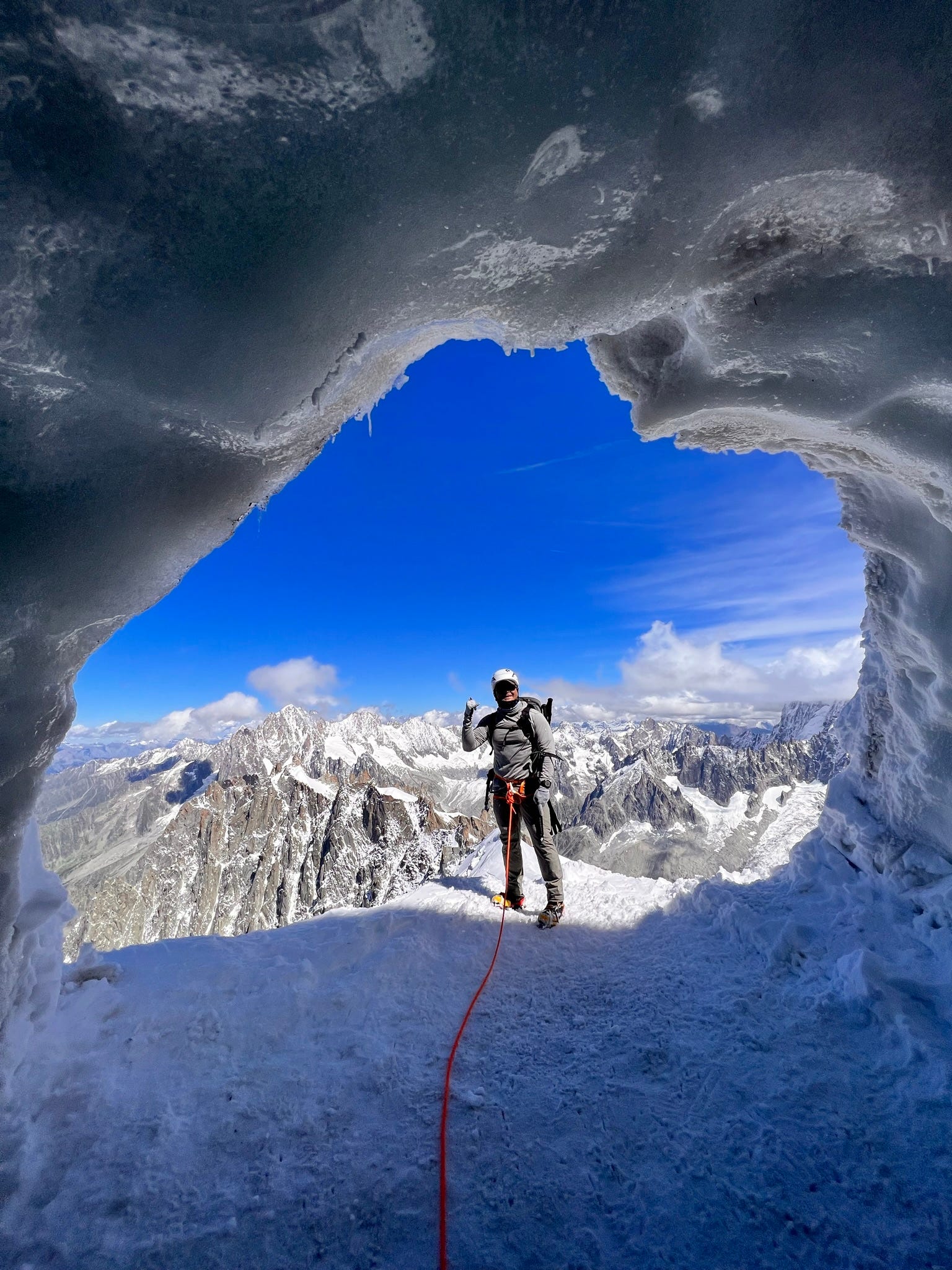
Kevin, my British guide, was with me at the Refuge de Tête Rousse the night before our summit attempt. We slept in the sense that word takes on at altitude. And that was because the day before, the weather was wrong.
Above that refuge, the route crosses the Grand Couloir, which the French press calls the corridor of death, and which has earned the name. Rockfall was coming down where we could see it and hear it. Here’s a video of it:
Kevin made the tough call to turn us around…neither of us was easy about the mountain that day, so we went down. It was both disappointing and disheartening. But there was a highly consequential part to this experience.
Others went up. From where I stood they had looked at the same weather and the same falling rock, but reached a different reading of how much danger was acceptable, and they proceeded. I watched them go while we turned around and gave up the photograph.
I never learned what happened to them. They walked up out of sight and that part of the story stops there. I do not know whether they stood on the summit that afternoon, whether they read the couloir again higher up and came down on their own judgment, or whether the mountain charged them for it.
On that morning, I handed my judgment to Kevin. I came down, and whatever part of me would have told me whether the handover was sound is on the far side of a route I did not take.
That is the ordinary condition of a decision made under uncertainty. It does not come back later with a verdict. It gets made, and then you live in the version of the world where you made it, with no access to the one where you did not.
What I did not see at the time is that Kevin ran validation; the climbers who went ran verification.
Remember that Verification asks whether the requirement can be met. That morning it probably could have been. Validation asks whether the requirement should stand at all given what is actually true about the underlying conditions.
That question cannot be answered by the part of you that has trained for this and is standing at the bottom of the route with a weather window and a flight home. The person who wrote the requirement is not qualified to withdraw it. I did not make that call; Kevin made it.
That is what a guide is for on a rope team, and it is the seat that sits empty in most accomplished lives.
The flattering version of this story has me as a person wise enough to stop, while the accurate version has me roped to somebody whose job was to hold an authority I had temporarily handed over. What I carried down with me, though, was the experience of what it costs to be the one who makes that call. In short, I developed an understanding that I would have to be able to make that call by myself, alone, if Everest ever asked.
The second time, there was nobody to make the call for me
Everest asked, and I had not expected it to. I got sick the day before the weather window opened up…the ordinary traveler’s illness that is a nuisance at sea level but something else entirely on a mountain, at high altitude.
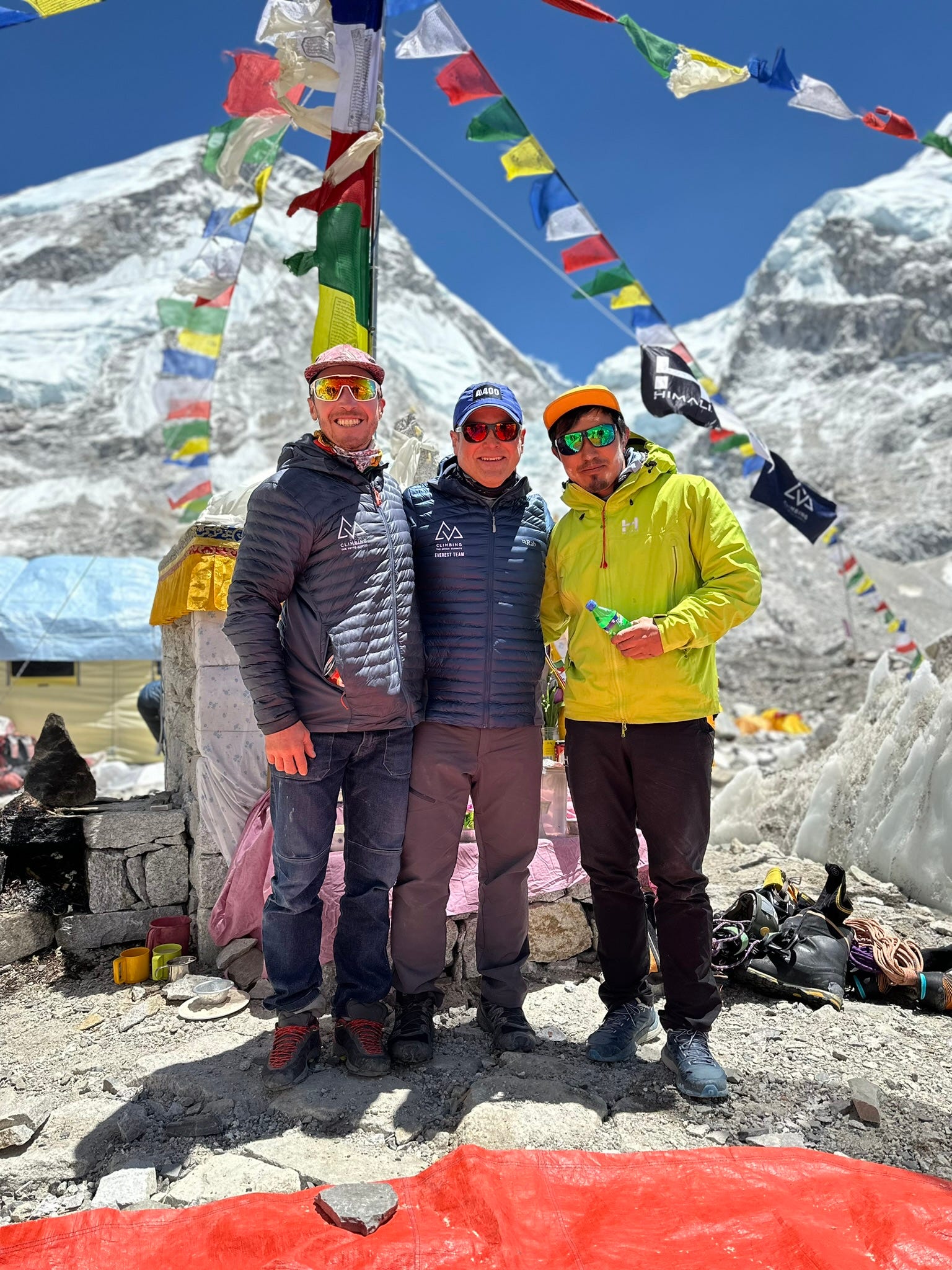
At around midnight, my Western-guided team and me started up the Khumbu Icefall. Rest and rehydration had done their work, or so it seemed, and I felt well enough to go. Something happened a third of the way up the icefall, though.
Nani, my Argentinian guide, noticed before I was willing to. I was tremendously slower than I had been on my first rotation over the same ground; sweating far more than the effort called for, and struggling to hold the pace. He had the comparison; I had the excuses.
The reasoning was not complicated: ‘if I feel this bad below Camp I, the chances that I feel better higher up are slim to none.’ Anyone can say that sentence. The difficulty is that saying it there costs you the mountain. I had no guarantee of a second attempt on that trip.
Turning around in the icefall could have ended the expedition, costing all the money invested, and the totality of the two years of preparation behind it.
Two things were with me in that moment and on that rope. One was Kevin, along with the rockfall coming down while other parties went up. The other was a sentence from my friend, Dr. AL, who had told me before I left to set my go/no-go criteria and then follow them, because criteria you do not follow were never your criteria.
I want to put that sentence somewhere permanent, because it is the whole of what this essay has been circling.
You cannot validate in the moment. The moment is precisely when the part of you that wants ‘the thing’ is holding the pen. It will find a reading of the evidence that lets you continue; the reading will be intelligent and sincere.
So you write the withdrawal condition earlier, during a time when you can think, and then the only work left at altitude is obedience to a decision made by a version of you who had nothing to gain.
A go/no-go criterion is a governor appointed in advance of when you will need one.
So, I turned around a third of the way to Camp I, and I recovered a few days later. The good people at CTSS built me another attempt, and I took it. I summited with Pasang, who is like a brother to me, just as Nani is.
The capacity was tested after all. It cost full price at the time it was paid, which is the only moment a decision can honestly be judged. The fact that I got a second attempt and reached the top says something about the mountain’s generosity that week rather than about my judgment.
The helicopter from Camp 2
At Camp 2 on the way down, two members of the party who had summited during my weather window arranged helicopter evacuations. Flying to Camp 2 is a recent capability; it is dangerous and expensive. That is why it is normally reserved for medical emergencies. Neither of these was a medical emergency, or even close to one.
I had a reaction to that. I have been examining the reaction ever since, because it is more interesting to me than the incident. My immediate, unconsidered position was that a summit only counts if you get to the top and come all the way down on your own feet. That is my rule and I hold it firmly.
I noticed how fast it arrived, too, just seven short days after publishing an essay arguing that a response arriving that fast tells you which function is automatic rather than which one is right. So let me put my own rule under the instrument.
The rule is sound and defensible: descending is where most of the risk on a mountain lives. The summit is a turnaround point rather than a destination, and treating the top as the finish line is the error that kills people. All true…but none of it explains the speed and heat of my reaction to two adults making a choice that cost me absolutely nothing.
The less flattering reading is probably a more accurate one. “On your own feet…” is a scoring rule; one written by the function that was always going to win under it. Of course, the Warrior in me wants the criterion to be uninterrupted, self-propelled endurance; that is its home terrain.
Scored that way, I win! I get to feel something clean about two people in a helicopter without ever asking what they were carrying that morning.
The icefall complicates that for me, however. I turned around a third of the way up to Camp I, with no guarantee of getting the mountain back. That is the one decision in my record where the criteria cost me everything at the moment I applied it.
To me, that is real evidence that I have a first principle rather than a scoring system. It is, in fact, the strongest evidence available to me, because it was paid for before the outcome was known.
The rule survives the examination with its status changed, from a moral law about mountaineering into a description of what I personally require an achievement to include before it does anything for me. That requirement has a specific author inside me, and his interests and mine overlap without being identical.
Interestingly, I almost left something out. I took a helicopter too…from Base Camp back to Kathmandu. My rule conveniently survives that.
Technically-speaking, the climb ends at Base Camp. I had come all the way down on my own feet by the terms I set. What happened afterward was travel rather than descent. Every word of that is true.
It is also the third time in this essay that a criterion I wrote has drawn its boundary at exactly the place where I happened to be standing: Mont Blanc, Camp 2, and the flight out. The icefall is the exception, and it is a large one.
What the other three have in common is that the line landed under my own feet. Herewith, I posit that a person for whom that keeps happening should find out who is drafting the lines. Which is when the question turns around and comes for me.
Where, in the life you live, did you take the helicopter?
I have taken it, and I have written about it without recognizing it; I have already told you about mine.
After my third entrepreneurial, exit the silence came. I diagnosed it as a planning failure at the time, treating a period of nothing as a gap in the schedule and going looking for the next requirement to specify; because a person with no requirement in front of him was not a person I knew how to be. That is my helicopter…
The descent, in a life, is the interval after ‘the thing’ is done and before the ‘next thing’ is chosen.
It has no requirement in it, which is its entire function. The reason it is unbearable is that everything you know how to do is a response to a specification; and in that space, there is none. There is only the accumulated evidence of who you have been and an unwelcome amount of time in which to look at it. So what do we do? We conveniently shorten it.
We announce the next venture within weeks… take the board seat, start the fund, sign for the next mountain. Each of those may be an excellent decision on its merits and you still need to know whether you chose it or were extracted by it.
The tell, to me, is in the timing: a requirement specified before the descent was finished was almost certainly written by the same function that wrote the last one; because it was the only function still awake.
At the launch of this publication I wrote that summiting and coming home are different competencies. I meant it as a caution because I understand it now as a description of two parts of a person; only one of which has been getting any training.
What I flew to Kathmandu to find out
Everest is a surveyor’s name. In Nepal the mountain is Sagarmatha, the Forehead of the Sky. In Tibet and among Sherpa communities she is Chomolungma, the Goddess Mother of the World. I verified Everest, and Chomolungma is what I had been standing on, and the Goddess Mother had lessons for me.
I flew out from Base Camp because I wanted to rest properly, and because I wanted several days to write before I went home. Pasang went with me because he was eager to reunite with his wife and his two beautiful children.
There is a difference between finishing a thing and integrating it. By then I had learned that the integration does not happen on its own; it happens in a notebook or it does not happen at all. Kathmandu is a good and magical city for that.
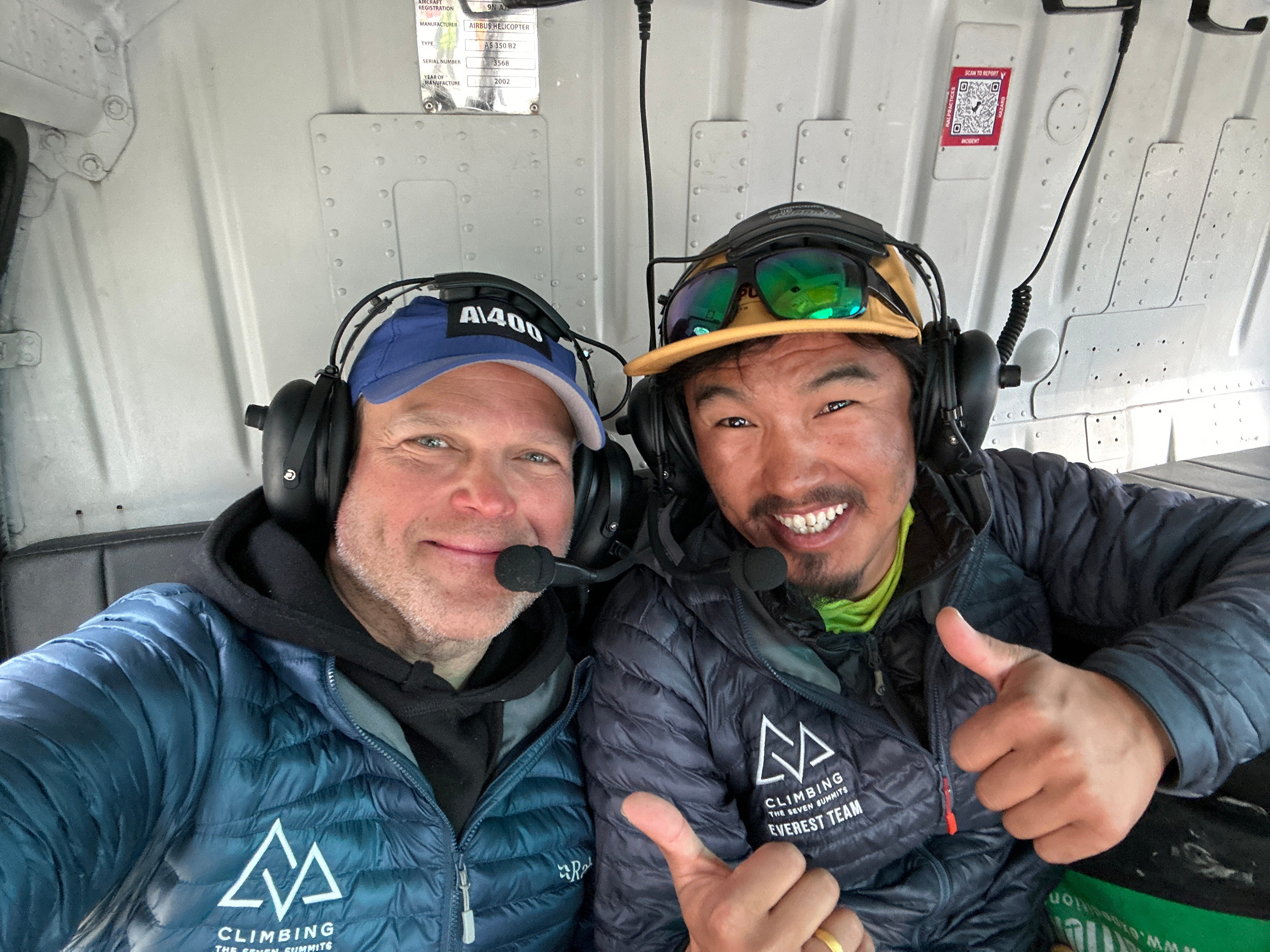
We landed in Kathmandu in a helicopter that set down beside another one carrying Nirmal Purja. Nims reached the airport at roughly the same moment Pasang and I did, and he greeted the two of us with a warmth I had no particular claim on.
I had met Nims during the expedition. That greeting is now among the things I keep, since it marked the last time I would ever see Nims again. He died on Broad Peak a few weeks before I published this essay alongside nine other climbers. I wrote about that right after it happened. Writing this essay has changed how I hold that memory.
Fourteen peaks above eight thousand meters in six months is the most verifiable achievement in modern mountaineering. It is also the part everybody already remembers about Nims.
The memory I now have is one at a heliport, about a man who had nothing to gain from being kind; a man worth knowing and remembering for how he lived.
I was not alone in Kathmandu. My friend Adam and his mother were in the city, and we spent a few days together. Adam’s story is a beautiful one of reinvention. His method is reinvestment; that is what he taught me.
Adam puts every return straight back into more capability rather than spending it, and that lesson has been working on me ever since. He gets his own essay and the mountain will be the least remarkable thing in it.
There were also places I had not had time for before heading to Base Camp; one of them was not optional. By the river there is a cremation ground. I had been there twice before, and both times I had thought, with the confidence available to a person who has not yet done the thing, that the encounter would be different once I had come down off the big mountain.
So I took the helicopter to find out. Whatever the two at Camp 2 were doing with theirs, mine was a flight arranged specifically to reach the one place where the question I had carried down might get answered. That is either the best defense my rule has, or the most sophisticated version of the same evasion; I have not entirely settled which.
The place is Pashupatinath, a Hindu temple complex on the Bagmati river dedicated to Pashupati, a manifestation of Shiva, and a UNESCO World Heritage site since 1979. What people remember about it is different from any of that: cremations happen in the open, on stone platforms at the river’s edge called the Aryaghat, all day, in full view of anyone standing on the far bank.
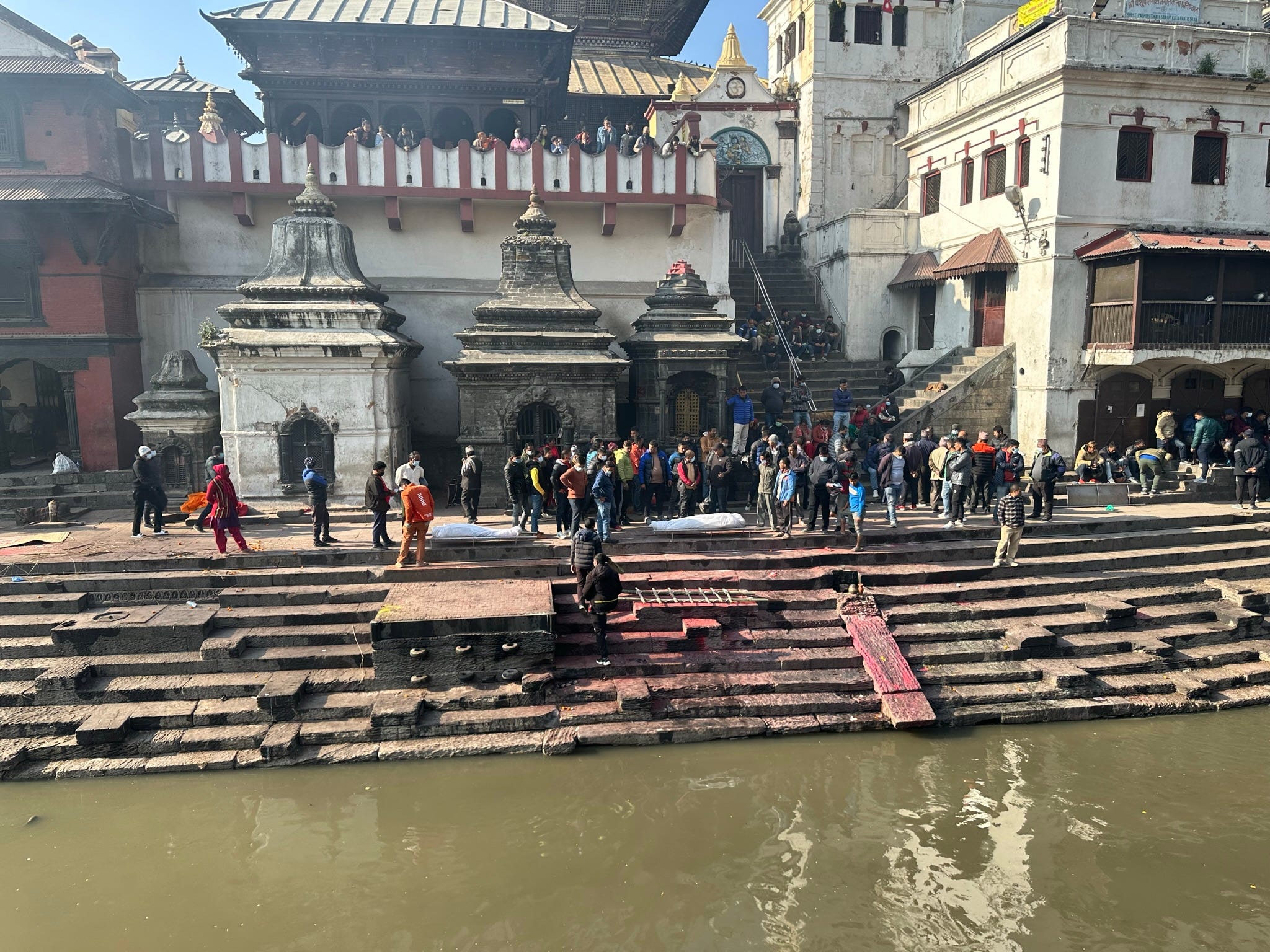
You smell it before you see any of it. It reaches you on the bridge, and it arrives in layers, in an order, and your body sorts them before your mind is consulted. Wood smoke first, resinous and almost pleasant, then marigold, then the river, which has a weather of its own. And underneath all of them, rising up through them, the one your nervous system identifies correctly on the first breath and objects to on the second.
It is fat, and hair, and something unmistakably a person, sweet in a way that sugar is not sweet, thick enough to have a texture; closer to a taste than to a smell, and it coats the back of the throat and stays there. On my third time there, I learned that familiarity does not soften it. An hour in, it is exactly what it was on the bridge.
There is no eyelid for the nose. You can look away from the platforms, and people do, but I did not. Looking away changes nothing, because you go on breathing, and every breath is another delivery of the same fact. You cannot squint at it and you cannot lower the dose. The only refusal available is your feet, and you know within a minute that leaving is the one thing that would work; and yet I stayed…again.
The smell gets into the weave of what you are wearing and comes back to the hotel with you. It went through me and did not come back out.
A cremation there is work, done by the family, with their hands. The body arrives within about a day of the death and is washed in the Bagmati, whose water is held to cleanse the soul. The eldest son, head newly shaved, sets the fire at his father’s mouth and stands there while it takes, and it burns for hours in front of everyone. Afterward the ashes are swept into the river, the family enters thirteen days of mourning, and then they come back every year for the rest of their lives.
The belief underneath it is that the body is a garment, that death is a transition rather than a terminus, and that the fire releases what was wearing the garment toward a better birth or, for the fortunate, out of the cycle of birth altogether. The burning is the last service a family performs for one of its own, and it is performed in public because there is nothing about it to hide.
Then you look at the families, and your objection finds itself standing alone. They are not hysterical, and they are not performing composure either. They are doing the last chores of a relationship: adjusting the wood, handling the cloth, standing where they are supposed to stand. There is a serenity there I did not expect and have not been able to explain away. Grief is present. It is simply not running the ritual.
The culture I come from handles death by delegation. The body is collected by professionals within the hour and returned prepared, viewed briefly, in a controlled room, at a scheduled time, with the evidence of what happened to it cosmetically removed. Nobody’s son puts fire to anybody’s mouth.
The dominant Western Christian frame treats death as an enemy already defeated elsewhere and later, which is a serious theology and a real consolation. It also arranges things so that you never have to look. At Pashupatinath, looking is the ritual.
What the arrangement spares you is a violence with no aggression anywhere in it; the same kind of violence that a ‘thing’ commits simply by refusing to stop being there.
The Buddhist traditions of the Himalaya go further still. In Vajrayana practice a charnel ground is a training ground, somewhere practitioners deliberately go, on the reasoning that a mind which has genuinely absorbed impermanence behaves differently from a mind that has merely agreed with it. That distinction is the one I keep circling back to here.
Agreement is cheap because agreement is voluntary. The entire difficulty of a human life sits in the distance between assenting to a fact and being altered by it. What closed that distance for me at Pashupatinath was something I had no way to stop breathing in.
Death smiles at us all
I arrived at that river carrying a line from a film, as most Westerners of my generation probably would. In the film Gladiator, Maximus tells Commodus: “I knew a man once who said, ‘Death smiles at us all. All a man can do is smile back.’” The man he is supposed to be quoting is Commodus’ father, Marcus Aurelius.
The funny part, to me, is that Marcus Aurelius never said or wrote it. The line does not appear anywhere in the Meditations. A screenwriter wrote it, yet it has circulated ever since the film came out as ancient Stoic wisdom among people who have never opened the book.
The closest thing Marcus Aurelius actually wrote is the final passage of the Meditations, which is gentler and stranger: go on your way with a smiling face, under the smile of the one who bids you go.
I have spent this entire essay arguing that meeting a specification is not the same work as choosing it. And, here now is the most-quoted piece of Stoicism in the English-speaking world, verified a million times over in as many captions, but never once validated by anybody who repeated it.
The sentiment survives, which I hope is the part of this essay worth having. That famous line is close enough to what Marcus Aurelius actually wrote, that it works. The wisdom held. What went missing was anybody checking whose it was, because it sounded right and it was already moving. That is precisely what happens to a life goal.
Death smiles at us all, and smiling back is the correct answer.
The Gladiator’s version of it remains a Western fantasy: one man, alone in an arena, meeting death as an adversary, and refusing to look away. It is a magnificent image; and it is one built for an audience. The Bagmati river proposed to me something harder and far less cinematic.
At the Aryaghat, death is a domestic event. It arrives on an ordinary afternoon, it is handled by your own family with their own hands, in the smell, in public, on a schedule. They then come back to the same stones every year for the rest of their lives. The smile that place teaches is one you give to something you have known a long time.
What she taught me is that ascents are sacred
The first two times I stood at that river in 2022, I was simply a visitor looking at a fact. The third time, I had spent a season deciding whether to become one. I had twice decided against it; once without a guarantee of a second chance at ‘the thing’ I had gone there for.
Sacred is a word I normally keep at arm’s length, because it usually turns up in the kind of writing that explains everything and tests nothing. It survives here because of where I was standing when the sense of it arrived. At a cremation ground, the sacred is a working category rather than an atmosphere.
What the word carries for me now is as follows: a requirement closes, development, threshold, date, photograph; and once you have met it, the meeting has changed nothing about who you are. An ascent stays open, it keeps asking, keeps costing you, and it keeps handing back things nobody specified in advance.
Chomolungma is still teaching me, and I did not sign up for the curriculum.
There is a book and a film now; both underway. I have made a film before but this one goes somewhere that one did not. The timing here convicts me. I registered the website domain for it on March 31, 2024… twelve days before I left for Everest: SacredAscents.com.
The next requirement was specified and paid for while the current one was still unmet, which is the purest form of the pattern this essay describes. Hilariously, I did it without noticing I was doing it. I even had a poster designed for it!
Then I came down. And the project did not survive the descent in the shape I had written it. I withdrew from it as I had defined it, and I am happy to report that.
What happened after that is the part I would hold up as evidence. I did not replace it the following week with a better-specified version. I left the interval empty and kept it empty for a couple of years, and everything I know how to do wanted to fill it. That is the test this whole essay has been assembling.
A quest you cannot put down is a compulsion in better clothes.
It will feel identical from the inside, because compulsion always presents itself as devotion. A quest you could put down and continue anyway is a quest.
In Dan Millman’s Way of the Peaceful Warrior, Socrates keeps teaching Dan as a student who keeps believing he has arrived. The useful part of that story is that the teaching has no terminal point, which leaves exactly one live question: whether the student is still choosing to be taught.
So when I say that ascents are sacred, this is the practical content of it. The thing I registered a domain for is not the thing I am making. Something else came up through the gap while I refused to fill it; it took years of refusing for that to happen. Chomolungma is not finished with me.
What the mountain could not tell me
I came down from visiting with the Goddess Mother with something I had not expected. It was a question rather than a lesson: if the part of me that wanted the summit is not the part it was for, then something in me wanted something the mountain was never going to deliver.
That something was patient enough to let me spend years and a great deal of money finding that out by exhaustion rather than by asking. That thing has preferences. It is unimpressed by altitude, and it did not congratulate me at Camp 4.
I do not think it is a mystical presence. Nor do I think it is pure neurochemistry. I hold a third position between those two rather than taking one for the comfort of it, in fact. It has been consistent in that it has been there longer than any of my strategies, and in that every serious tradition I have studied has a name for it.
The Greeks held the oldest name for it. But that is for next Sunday…
The practice: the Descent Check
Third in the family, after the Instrument Check, which reads the body, and the Conditions Check, which reads the household; this one reads the destination. It takes about thirty minutes and one conversation you would rather not have.
Pick the last significant thing you summited: an exit, a promotion, a degree, a book, a number, a title, buying a house. Not the most impressive; simply the most recent one that mattered.
Write the requirement exactly as it was specified at the time, in the terms you used then, rather than the meaning you have since attached to it. The measurable thing: the multiple, the title, the date, the number on the offer, or the letters after your name. Requirements are always more specific than the stories we build over them; the specificity is the evidence.
Now name who wrote it. Use last Sunday’s four archetypes as guide, if they are useful. Which function needed that particular thing to be true, and what was it protecting when it specified that requirement rather than a different one?
Then name who it was supposed to be for. This is the question the whole protocol exists to reach. When you imagined the requirement met, who was in the picture, what were they doing, and what were you like in that scene?
Compare that against what actually happened the week the thing happened. If nobody was in the picture, write it down, because that is a finding rather than a failure.
Now the descent. Look at the ninety days after that achievement occurred. How long was the interval before the next requirement was specified? Write the actual number of days. Then ask whether you came down on your own feet or called for extraction, and what exactly was so intolerable about the terrain in between.
There is one more question…and, for some readers it will be the only one that matters.
When did you last withdraw a requirement you had already committed to? Not failed at it, and not allowed to lapse while you looked elsewhere. Withdrew, deliberately, while it was still achievable, because it had stopped being the right thing. If you cannot find an instance, that is the finding.
The follow-on question is: who in your life currently has the standing to make that call with you?
Then do the part that makes this a protocol rather than a reflection. Within seven days, find one person who was around you during those ninety days and ask them what they observed about you in that period. Not how you seemed at the summit; afterward.
Do not explain yourself first and do not correct their account while they are giving it. You will very likely learn that the interval you remember as brief and productive was neither, because you were inside it and they were observing it.
Finally, turn it on the present. What requirement are you verifying right now? Say it in measurable form, the way you would write it into a specification. Then, ask who wrote it and whether you are meeting it or being carried by it.
Finally, do the thing Dr. AL reminded me to do: the forward half of this, and the only part that protects you. Write the go/no-go criteria for that requirement today, while you can think and have nothing yet to lose by thinking.
Name the specific conditions under which you would withdraw it. Make them observable by somebody other than you. Then give them to that somebody, because criteria you keep to yourself are the ones you get to reinterpret at altitude.
The answer does not have to be that you abandon the requirement. Mine is still to climb things. The answer is that you find out whether you chose it.
And if you are willing to write back one line, make it this: what in this essay felt most true, and what felt most incomplete?
Replies reach me directly. I read every one, and they shape what I build here next.
Next Sunday: the oldest hypothesis about what your restlessness is. The Greeks gave it a name, and the name did not mean ambition. It meant something that has an opinion about your life and no interest at all in your résumé.
Start here
Every essay in this publication builds on the five that launched
it. If you are new, they are the place to begin.
As someone who has lived a significant life in medical devices, the whole theme around verification and validation when applied to personal goal setting was refreshing. I need to back up and read through your essays in order and work through these exercises in order. Thank you again, for your thought provoking work. Side note, the photos are stunning! Even if they aren't the "why" behind the climb.
Ah, validation-that old bugbear, so often tripping up the Nobel Laureate, the "Man of the Year", Yesterday's Hero in a world of instant celebrity lasting all of 15 minutes. There has never been, in my rather inconsequential life, a moment of verification and adulation that has not featured someone, standing off to the side, stonefaced or scowling. The best of those people have accompanied the scowl with meaningful input, which I have most often found useful, in validating myself going forward. Among them are my son, my late wife, my middle brother, my late, sainted mother-and one of the best students I ever attempted to teach.
As for the last descent I have made-It was moving from Prescott, AZ, my home for fourteen years, leaving the mountains, canyons and desert behind and entering a world of prairie, city streets and cul-de-sacs where the neighbours, more or less, enter and exit their homes anonymously. I left an apartment where I lived alone and yet never felt alone, for a house where neither is the case. My son, daughter-in-law and ubiquitous, boisterous and life-validating granddaughter banish any loneliness to the hinterlands of a long forgotten past. The descent, as it were, was driving a full moving van across a thousand miles of Interstate Highway and wide secondary State roads. There were a few bumps, in crowded truck stop parking lots that are the ice floes and boulder fields of the road. Mostly, though, I made it from Point A to Point Z without feeling invalidated.